Tuesday, March 14, 2006

George Ws' Cricket Blunder

Bush’s foray into cricketing diplomacy highlights the dangers of cultural ignorance in international affairs. Apart from being plain insulting to cricket fans around the world, and there an estimated 3 billion of them, there are dangers of inflaming even more violence.
The administration would be well advised to stick to what they know, if anyone can work out just what that is. Read more on Bush’s cricket here…

George's hapless advisors wake up to sex

It is slowly being revealed to us, or those of us open to the signals. George W is being slowly chocked by a curiously inept collection of advisors.

True Karl still roams free and Dead Eye Dick has happily resumed his secret hidey hole where he can safely dispense directions. Not so fortunate are the holy roller set with Claude Allen taking the administrations penchant for greed to personally dangerous extremes.
Former high flyer and aspirant for Georgia lieutenant governor, Ralph Reed, is trying hard to outrun his ties to former freelance advisor, Abramoff.
His stickiest cabinet member, Interior Secretary Gale Norton, is hitting the road, before the road hits her. Good old Jack Abramoff is tied up in her fortunes, among a number of controversies.

Then there are the unseen advisors
We are used to the unseen with this administration, but we do get to see the comic results of his hidden league of advisors. As a long time cricket fan I was amused to hear Bush bumbling through a statement on how he could really take to this game.
We, the cricket fans of the world, would have been really pissed off at any attempt by the US to take over the noble sport. In reality, however, we know that Americans do not have the stamina to withstand the glories of a five day cricket test match.

Whoever advised Bush to talk up the willow should be taken out to the Rose Garden and publicly shot; if only for showing those in the cricketing world that the President is truly ‘short a couple of kangaroos in the top paddock’. A sandwich short of a picnic is the only way to describe the most powerful man in the world trying to wield the willow.


Dinner and sex with the president

The National Republican Congressional Committee are, no doubt, an important extension of the Presidential advisory team At least they behave in the same way as the official team.
At the upcoming United to Victory dinner in Washington D.C. this month Bush will be host to Congressional leaders and Administration officials to discuss advancing powerful pro-business, pro-family agendas.
The NRCC have ensured a truly representative forum, wit the inclusion of adult starlet Mary Carey who was also a Republican candidate for governor of California.

To be honest I think the inclusion of Ms Carey, who will no doubt be advocating the need for constant practice in the family making department, is great. If our leaders and lawmakers spent more time fooling around they might have less time on their hands to destroy our world.

If only Australia and Canada had leaders who could even vaguely be contemplated as sexually active. Let’s face it, sex is a great distraction, and the Bill Clinton didn’t drag half the world into bloody wars.

Saturday, March 11, 2006

Now tell me that damned war was not about oil!

AUSTRALIA'S leading company, BHP-Billiton, won new oil deals in Iraq after the fall of Saddam Hussein by using agents who were deeply involved in the UN oil-for-food scandal, documents released by the Cole inquiry revealed yesterday.

Now let us see similar inquiries in the USA and Britain. The corporate run governments of these countries can cover up for only so long before the people work out they have been duped.

Profumo: Death of an unsung hero

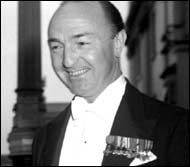
Those of us, of a certain age, will easily recall the media frenzy back in 1963 over the ‘Profumo Affair’. The news that the man at the centre of the fuss, former UK minister John Profumo has died at the age of 91. See NewsHound
For the student of public scandal and political misbehaviour, the ‘Profumo Affair’ stands out for many reasons. For me, the most significant is that it awakened in me, barely in my teens, an abiding interest in public affairs.
I have poked around the bones of this seminal event frequently over the years. The reality is the titillating aspects of the sex scandal hide a wealth of insight into what makes a scandal and how it is perceived and dealt with.
Profumo himself no doubt fell into the trap of power, but his subsequent behaviour suggests that there was far more to the man than this lapse. If it had occurred prior to the ‘sixties era’ the scandal would probably not have seen the light of day and Profumo would have gone on to achieve great political accolades.
As it happens, being a creature of the old school, Profumo went quietly, forsaking a bright future, holding to the dictum; never complain, never explain. He lied to parliament; that was enough reason to fall on his sword.
Profumo, however, did not waste his gifts. Unlike today’s avaricious office seekers, he did not go out and peddle his skills and contacts to the corporate world for his own gain. He didn’t whine and seek to bring down others with him. Instead he quietly and efficiently gave his life and skills to a charity organisation in the poorest part of London.
Toynbee Hall is not a ritzy charity. It is in a rough area backing onto the street where Jack the Ripper killed his last victim, five years after its establishment by an Anglican priest and his wife in 1873.
When he approached Toynbee Hall after his fall from grace it was not to seek some alternative position of power; he would have been content to carry out the meanest of tasks, which he initially did. ***Profumo's first job after scandal was cleaning toilets***
But the charity was not about to waste Profumo’s talents. He was to to become the driving force which saw this old charity survive and prosper.
I have to admit, went from a figure of ribald fun, in my eyes, to a very real life hero. Far from those 'swinging sixties' images of tawdry sexcapades, John Profumo's life became one of admirable dignity and selflessness.
I happily predict that the predictable mass of posthumous bios will show Profumo for the hero he really was.

Friday, March 10, 2006

Tainted Wheat effects the senses

Australia’s current inquiry into the impaired senses of leading political and business leaders was recently given an extension. This is, it seems, because of the extra time entailed in coxing hearing, sight and memory impaired witnesses, most of whom hold powerful positions.
Of course the politicians are merely lumped into the pool by extension, as they forgot or didn’t see the need to be included in the investigation. This is regardless of the fact that the two major corporations involved in this inquiry into commercial idiocy have historic, strong links to the highest levels of Australian government.
For those who failed to turn on their hearing aids, pop in the contact lenses or just plain forgot, I am referring to the Cole inquiry into kickbacks under the UN’s Oil for Food Programme.

In another stunning display of impairment, major players have also confused retention of the much prized ‘single desk’ wheat marketing system with the need to coddle a corrupt bunch of crooks. Well, they don’t think they are crooks, they believe breaking national and international law is okay if it gets the job done.
The debate over retention of a monopoly on wheat exports is valid, but it is not central to the case against AWB or BHP-Billiton.
The fact that the monopoly is Australia’s last remaining vestige of an old ‘agrarian socialism’ policy, in a climate of open competition should be at the heart of this debate. The fact that government so blatantly practices double standards on major economic issues should be part of the argument.
Even so, if it is essential that wheat should be controlled by a single ‘monopoly’ exporter, AWB have proved themselves unworthy of the responsibility. A simple answer would be to transfer the responsibility back to a government authority rather than leave it in the hands of a listed corporation. The only problem with that is that the most qualified body, the Australian Wheat Export Authority has already shown a lapse of ethical will in relation to the scandal.
Minister for Trade, Vaile recently raced off to Baghdad to pull some kind of wheat deal out of the ashes of the AWB debacle. It would have been a far easier task if parliament had first stripped AWB of their grip on exports, even if  that meant an open market while the whole issue was sorted out. Logic and commonsense appear to be other assets in sort supply in Canberra.

The real irony of the whole affair is that the US administration, normally quick to take advantage of trade issues and who have fought hard to dismantle Australia’s monopoly wheat exporting system, seem to have forgotten this is all happening.
Perhaps it is something in the wheat, a mind altering fungus or contaminated iron filings. Whatever the reason the US has ceased its grandstanding and bluster over the single desk marketing practice and apparently, quietly accepted Australian explanations for actions which appear to be corrupt.

Little wonder the head counsel at the Cole Inquiry lapsed into a Basil Fawltey parody at one hearing session. It wasn’t quite “are you deaf, blind and stupid?” It was close enough.

Scores killed on Baghdad's bloody Wednesday

It was, we were told, essential to rid Iraq of the menace of Saddam Hussein and his murderous regime. Without the ‘Butcher of Baghdad’, Iraq would quickly become a joyous benefactor of western democracy.
Of course the lies and diversions which were employed to ensure this ‘essential’ war was prosecuted were transparent, to those who wanted to see. In the self serving process, the sponsors of this war, the oil and arms industries, have done far more than simply shoot themselves in the collective feet.
Iraq is in turmoil with waves of violence which at least match, if not exceed the activities of Saddam’s deck of cards. Bloody Wednesday (march 8 2006) might represent the high end of violence to date, but it also represents a point on a rising trend of outrage and violence.
What happened? For starters the bodies of 18 men were found in an abandoned minibus and 50 others were abducted in a daylight raid on a city security agency. Almost 50 others died in violence across the country in the same 24-hour period.
It has been reported that the 50 security guards went peacefully with interior ministry troops because they thought it was some kind of official operation. That means our great coalition of the willing has managed merely to supplant one bunch of butchers with another, albeit the one with official blessing.

And in a sinister attempt to cleanse public records of the handiwork of what senior US officials now openly refer to as "death squads", staff at Baghdad's central morgue say they have been ordered to catalogue violent death only by bombings or insurgency clashes — not as execution-style shootings. A UN human rights official appeared to confirm this after the morgue director fled Iraq.

Gunmen who raided a security firm controlled by a relative of Sunni Vice-President Sheik Ghazi al-Yawar were dressed in police uniforms, but there were contradictory official responses to the attack in which the 50 guards disappeared.
Three senior Interior Ministry officials told reporters no such raid had been authorised. But two others claimed it was an officially sanctioned operation by police commandos acting on a client's complaint.

No doubt Dick Cheney already feels like he is being punished as polls show him bouncing his bum along the bottom of the public opinion charts. He and his corporate buddies should suffer far worse fates than simply public ignominy. They should all be made to exist in the hell hole they have created in Iraq.
Quotes from the Melbourne Age story: Scores killed on Baghdad's bloody Wednesday

Thursday, March 09, 2006

Putting the Wolf in charge

We reported, yesterday in the Daily Juice, that head of the world Bank Paul Wolfowitz has declared war on third world corruption. Then, mulling over the implications of that report, we had a somewhat troubled sleep.
It is not so much the war on third world corruption, although it always seems highly cynical when the tainted western economies presume to have the answers. Rather than reform for ethical reasons it smacks of just another battle in the global trade war.
That the push is led by Wolfowitz does ring alarm bells. Indeed one commentator, Patrick Bond of Counter Punch - The Loans of Mass Destruction – makes a case that Wolfowitz was chief planner of the hoax perpetrated on the American people over Saddam Hussein's weapons arsenal.

The article trots out some interesting observations:
…Ariana Huffington observed last November, 'Talk about your Extreme Political Makeover. Wolfie has gone from war hawk to the second coming of Mother Teresa--all without having to make any kind of redemptive pit stop in political purgatory or having to apologize for being so wrong about Iraq.'
…Washington Post journalist Dana Milbank in December: 'Being Wolfie means not having to say you're sorry…”
“There is no question that Wolfowitz quickly learned to talk 'left' about unfair trade subsidies, meagre US aid and corruption. Whether this was merely superficial rhetoric, veiling the sinister agenda of the petro-military complex, would soon be tested.”
Coming after a long night, musing over the possibilities, this article added an extra chill to this brisk BC morning. Peering out here onto the gloom of mist laden and sodden forest, it is conjure appropriate analogies for the ‘Wolf’. More difficult is spotting the potential ‘Red Riding Hood’ and axeman who might deliver us from the impending consequences.

Curious Doings in Sugar Land

As HL Mencken once famously said, "Never overestimate the intelligence of the American people". We are not sure why he added the geographic limitation, but the US is does tend to be a world leader in most things.
We have, of late, deferred to our US based bloggers for insights on the curiosities of that country. With reference to the remarkable Tom DeLay we have passed the ball to the blogger at the epicenter, “our man in Sugar Land’, MikeVotes.
The voter endorsement of the former majority leader's bid for return to the house in the next election, and no doubt high office, is mind blowing. He beat three challengers in his first electoral outing since being indicted.
I guess, at best, it shows the belief in innocence until guilty is proven. Either that or it shows just how ready voters are to accept corruption as nothing more than ‘the way things get done’.
Meanwhile DeLay still faces trial in Texas on charges alleging he funneled illegal corporate money to state legislative candidates in 2002.

Good old Tom doesn’t have it all his own way. A documentary is to be released soon, called "The Big Buy: How Tom DeLay Stole Congress," which promises to ‘join the dots’.
The films release is coming up at the Angelica Theater in the heart of Tom’s electoral district. “After the opening, the documentary will be released in DVD form and be distributed in video stores and on a website, www.tomdelaymovie.com. ” Part of the release plan is to organize thousands of viewing parties in private homes and churches in Texas and across the country instead of a movie-theater release…” Anti-DeLay film hits close to home The Hill
So we should all keep our eyes on Born at the Crest of the Empire, ‘our man in Sugar Land’ for the early reviews of this promising production. Thanks Mike…

Wednesday, March 08, 2006

It must be time for a coffee

I know it is off topic, but a couple of things prompted a diversionary, nostalgia trip. I thank Brownie , for the visit and comments. Especially the gentle reminder that the gang warfare in beautiful Melbourne is not; “youngish brawlers, but gangland, ie gangster warfare…” Lonely deaths in most liveable cities
Then in one of my favourite newspapers, the Melbourne Age, I read another piece jogging the sensual memories of that city - We've got a whole latte love...

Melbourne has been described as the ‘coffee capital” of the world, which might seem extreme to anyone who has never wandered the city’s Greek precinct. The aromas of this area are, from my memory at least, high octane caffeine.
The senses are assaulted by the wafting aromas and displays of sumptuous pastries. The whole sensory experience, on my past visits, was topped off by the chattering of the youthfully arrogant, strutting ‘wogboys’ who inhabit this European toehold on the South Pacific.
Okay, we might be waxing lyrical here, but living in Western Canada, for all of its delights, is life devoid of that Mediterranean influence.
I dream of good coffee, and using the best beans I can gather, and a second rate steam coffee maker, concoct a pale imitation of an espresso.
It still beats the local version of coffee hands down, an insipid brew dripped through the grounds and stored for use in hot flasks. Attempts to buy an espresso are good for the funny bone, but not the senses.
In a land where take out is king the diminutive serving is generally presented in a styrene cup. The embarrassment which accompanies the serving is not with the cup, but the seemingly paltry contents. Size is everything, and an espresso is hardly jumbo, super large.
The closest I have had to a decent coffee was served by a young bloke just back from a backpacking tour of Australia. On the coffee issue alone he was seriously considering permanent return downunder.
My pre-BC stomping ground was in Sydney’s Newtown, another location known for it’s exotic atmosphere and good coffee. (Even as Melbournians are chortling in the background, Newtown is a popular destination for them.)
One coffee shop or at least a waitress therein, specialized in the most exquisite variation on the standard espresso. The few drops in the bottom of the demitasse resembled, I guess, a ristretto- the short pour; that is high on coffee oils and short on water.
Said waitress had dubbed her concoction the ‘hummingbird’, an apt description given the after effects.
The Age article tickled me for another reason. According to the survey it cites, the espresso is the chosen tip of the ‘young man’, no doubt those ‘wogboys’ of Melbourne. But it has been many years since I could claim to be a young man, perhaps just young at heart.
For all its shortcomings, my steam coffee maker is calling. Ciao

Tuesday, March 07, 2006

Lonely deaths in most liveable cities

Reposted from NewsHound – see more articles there.
Sydney has again featured among the worlds best and most liveable cities. Vancouver heads the list.
"Excellent transportation, telecommunications and utilities helped Vancouver, British Columbia take the top spot in The Economist's ranking of the world's most livable cities; not a single U.S. city makes the top 10."
This is the Sydney where no fewer than seven decomposed bodies of elderly people have been found in the past month; the latest found on the eve of a government plea for neighbours to look out for each other.
Government has long since absolved itself of responsibility for those on the degrees of society and the rest of us are encouraged to put our own 'wealth generation' effort over the welfare of the community.
This is the case across western economies which put so much store in coin, at the expense of social structures; which leads to an interesting set of thoughts.
Vancouver, for instance, has an ugly underbelly of homeless and unwanted marring its 'best city' landscape. Melbourne, another top city, has perpetual and open gang warfare. Sydney has its forgotten elderly population.
What of all those great cities which come no where near making the list. Surely what makes a city liveable is a vibrant, robust social structure. It is a collective pride and energy to make things work. A city is, after all, a social entity, not merely roads and buildings.
Focus on the 'holy' dollar might serve to create an economic strength, but the cost is in devaluing the basics strengths of good communities. We see the results in increased drug related crime, in the massive increase in the dollar value of white collar crime, in the growing despondency and despair which leads many to social alienation.
Greed is replacing caring, selfishness is replacing community and the effects are being felt right down to the basic unit of society, families. If families are under stress, what hope is there for the next level, neighbourhoods? As the sydney example shows, it is possible to live and die in a densely crowded environment without anyone else noticing.
It is a chilling prospect, societies devotion to money is already leading us down the path to becoming lonely individuals, albeit, some rich ones. Governments or at least their corporate sponsors are leading the way. Like sheep, we are following, despite the fact there will be few beneficiaries in reality. The revelation of elderly and fringe social dwellers simply dying unnoticed should be a warning to us all.

Friday, March 03, 2006

Why do they screw us? Because we let them!

The idea of leadership, particularly political leadership, is supposed to be noble. They are, after all, given authority by we the people to govern on our behalf. Ahhhh, the glue smell particularly sweet today, it must be all this side act, playing with php and sql.
Yes, we all know that governments are bought and paid for by a fairly narrow section of society, i.e. those who can afford to buy, and profit from the ownership.
These thoughts have been playing on my mind, whilst dabbling with aforementioned program codes (perhaps why the codes are so bloody difficult!).
We’ve got good old George W, wallowing in all sorts of excreta, but still able to breath normally. He is showing a great talent for uncomplicated defense, namely Roving. I guess the normal tactics of dissembling and obfuscation are a bit complex for him, but with Rove on the strings he can get by.
Australia has George’s good buddy, fellow cricket loving PM, John Howard. Now Johnny could teach George a few things about handling a crisis. Howard squares up, tells it like it is, at least how he wants it to be, and doesn’t even blink.
He has built a neat information shell about himself and would reduce a lie detector to slobbering tears.
In Britain, George’s other good buddy; PM Tony Blair has been equally adept at walking through fire and emerging at the other side unscathed. While ministers fall around him, or others even go on the direct attack, Tony has seemed impervious.
I say has been, because out of the three, Tony is beginning to look a little less secure. Not because of scandal though, even if that weakened his grip, Tony is in trouble over social policies.

The point is, these three leaders have been shown, time and again, to be implicated in unethical behaviors. Well might Howard challenge, “show me the written proof”; knowing he does not allow sensitive issues to be committed to paper or other recording methods.
The fact is, it’s not what they might know or approve, and it’s what they have an obligation to know. Bush had an obligation to be informed on many of the key issues he is now dodging, not least of which was the vulnerability of New Orleans.
These leaders carrying the ball on our behalf, we are watching them continually drop it, and then apparently approving of them anyway.
It is like we are giving them permission to screw us, rather than demanding they live up fully to their obligations on out behalf.
Unless, and until we the people start disapproving poor behaviour they are happy to accept It seems to me to be high time to start kicking a little arse!

Wednesday, March 01, 2006

Australia Suckers USA?

Given the evidence coming out of Australia’s ‘oil for food’ inquiry; the rebuffed claims US Wheat Associates of kickbacks to Saddam’s regime; the muzzling of a US Senate inquiry into kickback claims, it looks suspiciously like the USA has been duped by the Aussies.

Of course looks can be deceiving, and probably are. For example, Australia’s agricultural hard man, the gun toting Trevor Flugge; former chairman of Australia’s monopoly wheat exporter isn’t nearly astute as he might appear.
In evidence to the Cole Inquiry, in Sydney, Flugge claims to be ‘deaf in one ear, and can’t hear with the other’. The result of this incapacity, it seems, is this high octane operator rarely actually heard anything that was being discussed in his various spheres of responsibility.
Even incapacitated in this way the Australian government sent the farmer’s fixer off to post war Iraq, with we are told a $1 million pay check, to "revitalisation of Iraq's agricultural sector “
Well, that is what we were told at the time. But the US wheat lobby weren’t best pleased about the appointment of ‘flaky Flugge’. They maintained that he was up to his eyeballs in corruption. And the funny thing is, the hard of hearing Flugge actually heard their accusations, and fired back this wonderful salvo:
"It is very easy to sit in air-conditioned offices in Washington and fire off letters to the Secretary of State," Flugge said. "We have got a team of people here - Americans and Australians - who are working 15 hours a day to try and stand up agriculture in this country which is nearly broken." He dismissed the corruption accusations as "absolute rubbish" Deal us in Sydney Morning Herald
The appointment of Flugge to this highly paid ‘humanitarian’ effort or at least an effort to protect Australia’s wheat markets was done with full knowledge of AWB’s kickbacks.
It has now emerged that the Canadians and US where correct in their suspicions of crooked dealings and that the Australian Government chose to turn a blind eye.

My problem with all of this is just how Australia managed to get away with ploy of inserting Flugge into the Baghdad role. The US wheat people screamed loudly at the time. The US administration could not avoid hearing the clamour, yet they conceded the point to Australia over their own market interests.
I can comprehend the Canadian’s speaking their piece then going quiet. It is, it seems, the local way not to make waves. Canadians are simply not brash and mouthy like their US and Australian counterparts.
Harder to understand is the US position. Any Canadian will tell you how dogged the US are about maintaining market supremacy, and Australia is hardly so powerful as to intimidate the US administration on trade or any other issue.
Then of course there is the UN. The United Nations signed off on the obviously suspect AWB wheat deals. They would no doubt have swept the whole issue under the carpet if the Iraq interim government hadn’t made a fuss about it. But having gone through Saddam’s ministry buildings in search of documents, garnering evidence and having old scores to settle, the Interim government had plenty of ammunition to force the issue.

I don’t feel the slightest bit sorry for Flugge or the other business people caught up in all this. The various governing administrations will no doubt be looking to hang these guys out to dry as the scapegoats for their own complicity.
But Flugge and his ilk are not simple business people. They wield enormous power in their respective industry sectors and on governments. US Wheat Associates might bleat, but they accepted what they could have changed if they chose to.
These are the powers behind government decisions, the tails that wag the dogs. But I have to admit, I would delight in seeing some of those pissant politicians go down, for being gutless if nothing else.

Tuesday, February 28, 2006

We shall overcome

Regular visitors will have noticed the irregularity in postings and updates here and on associated sites. You correspondent has been engaged in, or at least being bogged down in, implementing a CMS on his main site, www.galleonpoint.com.
Regular posts will resume as soon as we manage to work our way through the arcane languages of PHP and SQL. In the meantime you might all join in for a chorus or two of ‘we shall overcome’.

Saturday, February 25, 2006

Alive or Dead: Nobody cares

There is something profoundly disturbing about a society where people can die and remain unnoticed for many months. There has been a string of such cases in Sydney (Australia) recently, but it could be most places in the ‘developed’ world.
[I won’t go into the grizzly details which can found at the links below or Google news keywords: skeleton body elderly death Sydney.]

Death is a reality of our existence. People die everyday, there is no argument about that. Some of our sophisticated societies still actually kill people.
Death in and of itself is not the issue, the fact that people can live and die in busy communities, without anyone noticing either state, is a tragedy.
Society, it seems, has become obsessed with acquisition and consumption. The ‘must have’ culture is driven by modern governments under the aegis of the so-called economics of monetarism.
‘So-called’ because true economics recognises both fiscal and social aspects of an economy; monetarism recognises only narrow material aspects such as wealth generation.
From the outset, under such leaders as Regan and Thatcher, monetarism gave governments the authority top shed social responsibilities. It gave them authority to ‘rationalise’ government services into a ‘corporate approach. Social responsibility was replaced by concepts such as ‘user pays’ (ignoring the fact that many services are already paid for in taxes) and ‘volunteerism’ and ‘mutual obligation’. The latter a real curiosity as it suggests that a mere individual can have a mutual contract with government or society as a whole.
Margaret Thatcher summed up this ‘economic theory’ in a nutshell: "There is no such thing as society: there are individual men and women, and there are families."

Still, our leaders can’t be blamed entirely when the people have so readily accepted the dream of personal wealth at the cost of responsibility.
The dehumanising culture monetarism has created has resulted in a pack of inward looking, mean, grasping and greedy individuals. It cuts off real social interaction, and cooperative existence, at the roots. It is about ‘me’ and to hell with the rest.
This fundamental change has not been forced on individuals; it has largely been adopted voluntarily. Monetarism does not provide any more certain road to personal wealth generation than did preceding models. But the promise was obviously enough to fuel latent greed.  

Scientists monitor the health of amphibians, such as frogs, to determine the health of our environment. Perhaps if sociologists and politicians were monitoring people in the same way they would see a pattern emerging and be concerned.
Even just the spectre, riches or not, of a sad lonely end, should inspire some consideration of the corruption of the glue which holds our social structure together.
The lonely lives and deaths of those on the fringes of our golden culture of monetarism might shake up some. But we all need to take stock, clear the glitter of riches from our eyes and see where we are heading.

Some stories on the Sydney deaths:
Skeleton finds: awareness the key, say Salvos
Dying alone
The issue has been raised again in New South Wales, where six bodies have been found over the last two weeks.
Parallel deaths and no lessons learnt

Friday, February 24, 2006

George W eats his shorts

There is something immensely satisfying, in watching George W become the victim of his own cynical rhetoric. Satisfying, but saddening as well.
We refer, of course, to the sale of British-owned P&O Ports to Dubai Ports World; a sale which would give the United Arab Emirates-owned company management of the ports in Baltimore, New York, Newark-Port Elizabeth, Philadelphia, Miami and New Orleans.

It is ingenuous for US law makers to claim security implications in what is nothing more nor less than an investment proposal by a ‘friendly’ Arab ally. But then this is politics of the lowest common denominator, as played by the president.
Policy in the US has been driven, under this administration, by extreme simplification. The US constituency seems to have quite happily absorbed the simple approach, ie, there are Arabs are mainly Muslim, some Muslims commit terrorist acts, so all Arabs are terrorists.
This ignores many realities, but then that it George W’s MO, don’t spoil a good policy with the truth. We are seeing something of the same game being played out by George W’s obsequious ally and Australian PM, John Howard.
The satisfaction, I guess, is in seeing these greedy, grasping administrations being denied the big money deals their policies were meant to capture. The Middle East is both immensely poor and immensely rich. But tapping in to those riches has become problematic.
The sooner we see the back of this kind of world leadership, the better off we will all be, and as my old Granny used to say; all this will pass. Not too soon for me.

Wednesday, February 22, 2006

They are a cynical pack of bastards!

Every day of Australia’s Cole Inquiry makes it even more clear just how base and cynical the political class really is. The story is simple enough: while Australian troops were being deployed in the war against Saddam’s regime Australian trade officials were complicit in allowing nearly $300 million in kickbacks to the regime.

Australia had around 2000 personnel deployed in Iraq during the war, among the top five troop contributors in the coalition. The Desert Voice April 27, 2005
There were, of course, many more US service personnel, all put at extra risk by the illicit payments which it seems were know of and ignored by the US government. The whole affair is tantamount to ‘aiding and abetting the enemy’ and shows how little governments really care about the troops they so cynically use.


Soldiers' offspring asked to join fight
If that is not sick enough, try this little political masterpiece. In order to garner support for the continuation of the monopoly wheat export system in Australia, the system at the heart of all this duplicity, senior government ministers are organizing the descendants of the struggling soldier settlers from previous wars.
Hundreds of returned soldiers were granted land after World War I and resold later to World War II veterans in what has become rich wheat growing country. Deputy Prime Minister and Nationals leader Mark Vaile will address farmers, as will Senator Bill Heffernan, a close ally of John Howard.
Vaile is to call on the history of the wheat industry before World War II and during the Depression to highlight the difficulties before the establishment of a single desk.
Heffernan says "While ever the United States and Europeans have corrupt markets based on farm subsidies and cartels running fertilizer costs there cannot even be a remote chance of Australia giving up the single desk.”
If you were ever in any doubt about Iraq being a trade war, they should be dispelled now. Not that it really matters. Where once these cynical bastards might appeal to patriotism and other abstract emotions today the appeal is obviously and directly to greed.

US lobbyist bats for Aussie wheat Cheats

The ‘proverbial’ is beginning to fly of the fans at a furious rate at the Cole Inquiry into Australia’s UN Wheat Cheats. We have been firmly convinced the ‘who knew what’ extended into some lofty heights. From yesterday’s session:

Lobbyists hired by AWBSydney Morning Herald

AWB enlisted the help of an influential Washington lobby firm headed by the former US defence secretary, William Cohen, to deal with a United Nations investigation into kickbacks paid to Saddam Hussein.

The wheat exporter hired the Cohen Group last year as part of its strategy, code-named Project Rose, to deal with the UN inquiry headed by Paul Volcker and corruption allegations made against it by US wheat farmers and hostile US politicians.


Everyone in Canberra knew of kickbacks - The AUSTRALIAN

JOHN Howard, senior ministers and dozens of senior bureaucrats were warned five years ago Iraq was trying to corrupt the oil-for-food program by forcing Australia's wheat exporter, AWB, to pay kickbacks to Iraqi officials.
The scam was outlined in a diplomatic cable dated April 10, 2001 from Bronte Moules, an official at Australia's permanent mission to the UN in New York.


Among the slew of reports of yesterday's proceedings was a side note:

Department arrives to defend its ownSydney Morning Herald
The witness Tim Snowball asked the question on all our minds. A strange and rumpled figure had risen from among the lawyers to quiz him. Snowball asked: who do you work for?
"It is of no concern to you, Mr Snowball," snapped the commissioner. "Mr Snowball, your obligation is to tell the truth, no matter who asks you questions." Terence Cole, QC, is known as one of the hard men of the law. He's sharp. He snaps. He asks withering questions. But this was ugly.
Snowball's Melbourne barrister, Lachlan Carter, protested: "What is wrong with him knowing the answer to that?" Cole ordered the questioning to proceed.
But then the mystery lawyer, Alan Robertson, SC, courteously apologised to the tall man in the witness box. "I didn't hear that question, Mr Snowball. I represent the Department of Foreign Affairs."

Who is Snowball?
Torture under cross-examination - The AUSTRALIAN
"I'm just acting as a postbox here (New York) under direction from (AWB's former manager of marketing for the Middle East) Mark Emons and (colleague) Andrew McConville and Bronte Moules at the mission (Australia's permanent New York mission to the UN)," a desperate Snowball told the hearing, as a relentless Agius all but skinned him alive.”

…Snowball is relatively young - late 30s, early 40s at most. Two days in the witness stand revealed him as a polite, deferential person who doesn't appear to have done anything much in New York except what he was told from AWB's Melbourne headquarters.”

Tuesday, February 21, 2006

UN Thieves escape scrutiny

AUSTRALIAN government officials have known for at least five years that Saddam Hussein was corrupting the oil-for-food program but, like the UN, turned a "blind eye to it", according to evidence at the Cole inquiry.

Snowball’s evidence directly contradicts claims by the Howard Government it was not aware of corruption in the oil-for-food program until the UN's Volcker report revealed last October that AWB had provided Saddam's regime with $290million in the lead-up to the 2003 war.

The evidence is mounting, and as we have previously observed, embattled witnesses are going to start talking. The fact is, sooner or later given the evidence the Australian (Cole) Inquiry into the UN Oil for Food scandal has; somebody was bound to se the light.
Apart from those witnesses who had left AWB because of the unethical behaviour, a Mr Snowball had to come along.
Tim Snowball worked in AWB's New York office until 2001. In his own words his role was "to liaise with the Australian mission to the United Nations in New York (but not the Department of Foreign Affairs and Trade)"

As the links get bigger, the idea of any form of real justice becomes more remote. The Australian government look set to walk away from this barely singed. The UN will most probably escape scrutiny, despite growing evidence of duplicity.
No one will be game enough to raise the question of the Bush Administrations role inj this scandal, but the cover-up is there.
Unless those AWB executives who are set to take the fall for this scandal become miraculously credible, they will go down on their own. Its like the old spy movies where the main character is warned, “don’t get caught. You will be on your own. We don’t know you.”
The real problem for the executives is that corporate misdeeds are a great let out for governments. The public, even with the facts, is reluctant to pin too much on government authorities, but they are more than willing to allow the corporate clowns to take the heat.

Saturday, February 18, 2006

But what are they telling America?

US pours scorn on Guantanamo report

THE Bush Administration has dismissed as a "discredit to the United Nations" a Human Rights Commission report that calls for the immediate closure of the Guantanamo Bay prison camp in Cuba.

A White House spokesman, Scott McClellan, hit back, saying: "These are dangerous terrorists that we're talking about." He made it clear that President George Bush was determined to keep the prison camp open. Sydney Morning Herald

To paraphrase one time scandal pin-up girl, Mandy rice-Davies, “they would say that, wouldn’t they.” The Bush administration have dug themselves a nice deep hole with their whole terrorism distraction routine.
It’s interesting to note former staunch supporter, Britain’s Blair, is conceding to public pressure and walking away from his buddy Bush’s problems. Blair: Guantánamo is an anomaly. Although Britain has never supported of the Guantanamo approach.
It seems Australia’s Prime Minister and slimy toad supreme, John Howard, is all Bush has left in the world opinion stakes.*

Inside the US there are some straight news reports mixed in with the more predictable disclaimers: Annan Distances UN From Report On Guantanamo Bay New York Sun.
Then there are the genuine surprises, like: Former chaplain says closing Guantanamo wouldn’t fix problems.
Closing the naval prison at Guantanamo Bay, Cuba, would be a “great symbolic gesture” but wouldn’t necessarily improve the harsh conditions for detainees, said former Army Capt. James Yee, who once counseled there.

*Unlike Britain’s Blair, who refused to let his nationals be held at Gitmo, Howard has expressed his satisfaction with the incarceration of Australia's David Hicks. Hick’s, reportedly not the most sympathetic character, has simply been left to rot by his own government.
In fact, the only real champion Hick’s has had through this episode is his US military lawyer. I guess that is another reminder that there are real people, with real souls behind all the myths and generalities.

Friday, February 17, 2006

Australian hypocrisy

There is a strong stream of opinion, within Australia, that the Inquiry into the UN Oil for Food scandal is a nonsense and a waste of time and money.
The basis of the argument is that any supposed crimes are little more than the cost of engaging in international trade.
We discussed some of the public perceptions and reasoning recently in Another View of Corruption.


Cartoon by Spooner the Melbourne Age

In a show of gross hypocrisy, this same augment is also coming from Australia’s Howard government, as they weave precariously through the Cole Inquiry fallout.
AWB, Australia’s monopoly wheat exporter has been shown to have a long history of doing ‘whatever it takes’ to gain markets. If that means supporting Saddam’s regime while the government is at war with them, so be it. If it means breaking UN sanction laws, so what?
That they have done so with some measure of government complicity should raise serious questions, and not simply be fobbed off with – ‘well, that’s just the way things are done.’

A record of hypocrisy
There have, by now, been as number of books written, with reference to the Howard government’s record of hypocrisy and double standards. Rather than catalogue the list, I want to focus on those issues related to the former Australian Wheat Board, AWB Ltd and the surrounding mess.
1/ Australia is a signatory to the OECD Anti-bribery Convention, and has enacted national laws in line with this Convention.
2/ Australia is a member of longstanding of the UN and was a supporter of the Iraq sanctions and the Oil for Food Program.
3/ The Howard government has driven a National Competition Policy throughout all sectors of its economy, with one exception; it has maintained AWB’s monopoly on wheat exports.

Is that the way things are done?
What the Australian government is saying is that they can enact laws, support conventions and International programs, but they are not bound, themselves, to the limitations imposed. “We will make the law and the policy, but we don’t have to abide by it.”
It would seem that many ordinary Australians are ready to accept that approach, and perhaps adapt it to their own needs. The seeds of wider corruption are sown from the very top.

Personally I have real problems with John Howard’s approach to government. Not forgetting the encouragement of corrupt practices, the issue goes far deeper.
The very honesty, the veracity of every utterance of government must be in doubt, given their stand on these major issues.
What can you actually believe when a government refuses to uphold its own laws? More troubling is what can be done about it when a population seems content to accept such transparent dishonesty?